



Hey everyone! Lovely to be back. I’ll keep this month’s intro brief because I have three things on my chest and I’d like to get them off quickly.
The accessibility information gap is still very real. Researching destinations in 2026 should not involve sifting through hotel websites that tell you nothing useful — no door widths, no shower type, no mention of steps at the entrance. Just the word “accessible,” floating there as if it’s enough. It isn’t.
While we’re at it: can we retire “fully accessible” as a phrase? Fully accessible for whom, exactly? A step-free room might be perfect for a manual wheelchair user and completely unusable for someone with a power chair. The phrase means everything and nothing, and it lets providers think they’ve done their bit when the real work hasn’t started.
And finally — briefly — the rise of AI-generated accessibility descriptions. You know the ones: “This thoughtfully curated accommodation seamlessly integrates a suite of inclusive mobility solutions.” That’s a roll-in shower and a grab rail. Just say so.
But what are your thoughts? I’d love to continue the discussion. Let me know what you think in the Global Discussions group on tabifolk. See you there?
Right. Stepping off the soapbox for another month. On with the news!
Signing out — @Anthony_TWIA, tabifolk’s Culture & Communications Curator
📱 Tried the tabifolk app?
It’s the easiest way to connect with like-minded accessible travel enthusiasts, ask questions, join discussions, and stay on top of the latest news. Head to the App Store or the Google Play Store and download now!
TravelAble aims to cut through the confusion of accessible air travel
Accessibility guidance for air passengers with reduced mobility has long been a mess of jargon, contradictions, and hidden fine print. A new platform called TravelAble, launched this month by travel technology company Smartvel, is attempting to fix that. It centralises fragmented accessibility information from airlines and airports into a single structured system, tailoring guidance to each traveller’s individual profile — including their mobility equipment and battery type.
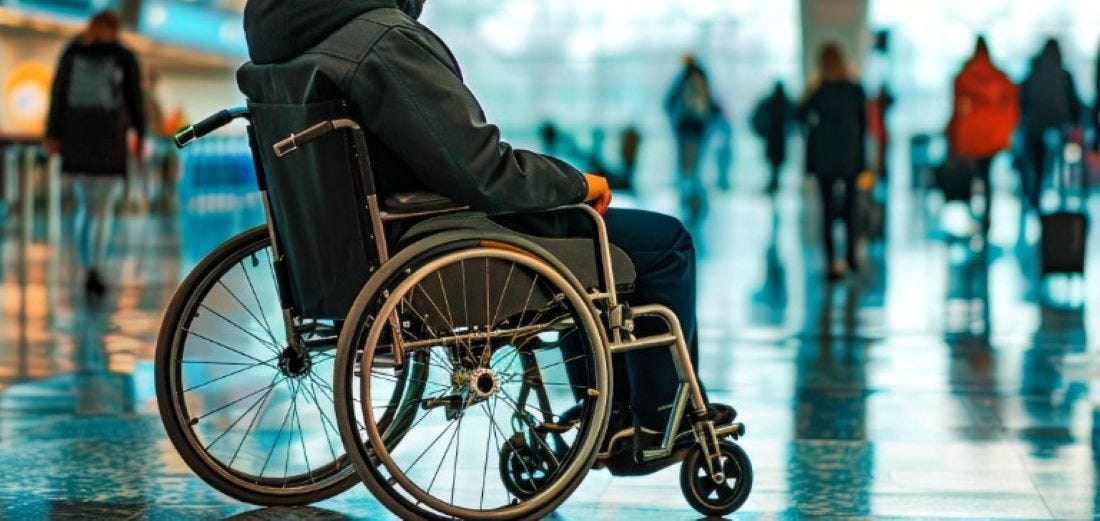
Crucially, it also translates baffling IATA service request codes (such as WCHR for wheelchair ramp and WCHC for full cabin assistance) into plain language. Research conducted during the platform’s development found that a third of travellers struggle to find clear accessibility information before a trip, and more than a quarter don’t know whether they’ll be able to board with their mobility equipment. Sound familiar?
💬 Discussion starter: Have you ever arrived at an airport only to find the accessibility information you were given beforehand was wrong, incomplete, or just plain confusing? What happened — and what would have made a difference? Share your story on tabifolk.
Oregon becomes the first US state to earn “Accessibility Verified” status
Travel Oregon has just been recognised with a 2026 Travel + Leisure Global Vision Award for a genuinely landmark achievement: Oregon is now the first US state to earn “Accessibility Verified” status across its tourism listings. The verification is conducted through Wheel the World’s structured, on-site evaluation process — not self-reporting, not ADA compliance tick-boxes, but actual physical measurements across multiple dimensions of accessibility.
Verified listings are available on both traveloregon.com and wheeltheworld.com. Travel Oregon’s VP of Brand Stewardship described it as both “a moral and economic obligation.” We’d agree — and we’d love to see other states (and countries!) take note.
Read more about Oregon’s Accessibility Verified status
Europe’s most accessible cities for 2026
Barcelona tops Wheel the World’s 2026 ranking for the second year running, followed by Vienna — fresh off the 2025 European Commission Access City Award — and London, which has the continent’s highest restaurant accessibility rate. Berlin, Madrid, Paris, Oslo, and Copenhagen fill the middle spots, each with strong transport and attractions, and Oslo leading all European capitals for accessible hotels.
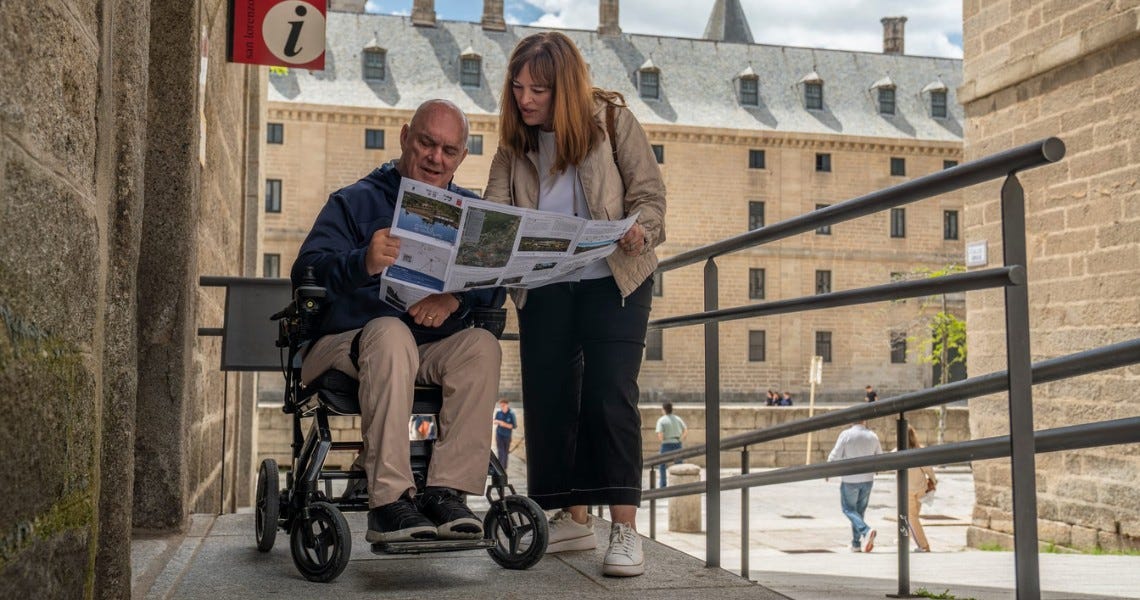
Valencia is a standout new entry at ninth, praised for its flat terrain and fully accessible transport network. At the same time, Rome closes the list at tenth — ancient cobblestones and all, but with accessible major landmarks and nearly half of its restaurants meeting accessibility standards.
Read the full accessible cities in Europe guide
Latest from tabifolk
tabi News highlights that Greece has installed ramps and access features at more beaches across the country.
Joan shared advice on traveling from Taiwan to Okinawa with a power chair.
daniellevates has an accessibility win to report on Virgin Voyages.
Josh discusses autonomous taxis and how laws may restrict accessibility.
The Milano Cortina 2026 Winter Paralympics closed — but its legacy may just be getting started
The Milano Cortina 2026 Winter Paralympic Games concluded in March, with China leading the medal table and Brazil winning its first Winter Paralympic medal — a historic moment for South America. Beyond sports, the Games' accessibility legacy is noteworthy. The Italian government invested €20 million to upgrade public spaces, city routes, and Verona Arena, improvements lasting beyond the Games. For the first time in Paralympic history, organisers allowed ticket buyers to indicate an intellectual disability, enabling features like quiet spaces, noise-cancelling headphones, and identification lanyards for non-visible disabilities at all venues. Though small, these policy changes are vital for those who need them.
Read more about the Milano Cortina 2026 accessibility strategy
💬 Discussion starter: Do you think major sporting events like the Paralympics genuinely leave a lasting accessibility legacy in their host cities — or does the investment largely disappear once the cameras go home? Have your say on tabifolk.
Accessible travel is heading for the mainstream — and the numbers show it
A new analysis projects that by 2030, all 73 million Baby Boomers in the US will be aged 65 or over. With this demographic controlling more than half of all US household wealth, the travel industry is finally sitting up and taking notice. Research by Longwoods International already shows that 18% of travel parties require accessibility features — and because families increasingly travel together across generations, accessible accommodation affects the whole group booking, not just one member.
The message to hotels, airlines, and destinations is becoming hard to ignore: this isn’t a niche market. It never was.
Read more about accessible travel’s mainstream future
Let’s get social!
Are you following tabifolk on social media? You can find us on Facebook, Instagram, Threads, and LinkedIn! Your support means a lot — and if you spot a post that resonates, a like, comment, or share helps keep the conversation going.
And finally, some trivia knowledge…
April is Global Autism Awareness Month — and some of the world’s most visited tourist sites are quietly reshaping the visitor experience. Venues from the Natural History Museum in London to Disneyland Paris have introduced dedicated “quiet hours” for neurodivergent visitors: reduced lighting, lower sound levels, fewer crowds, and sensory maps sent in advance.
It’s a powerful reminder that accessibility is rarely just about ramps and lifts. It’s about designing experiences that work for every brain, not just the majority.
Fitting, perhaps, that “April” is thought to derive from the Latin aperire — “to open.”